Helper, Utah

Dead Horse Creek

Vintage & Antique

Real pieces, honest provenance. The heart of it is the La Salle — a Helper hotel emptied after a hundred years — with vintage autos and desert finds alongside.

Carbon County · The La Sal

Everything here is exactly what it looks like. We bring it in, clean off the dust, and price it fairly — nothing restored, nothing invented, nothing pretended. What you see in the photograph is what you get, sold as-found. Call with the stock number and it's yours.

La Salle

The heart of the shop is the La Salle — a hotel, barroom, and café that lived together under one roof in Helper. Most of what's here came out of it; anything that didn't (the vintage autos, the odd desert find) is marked honestly. Click any piece to see where it came from.

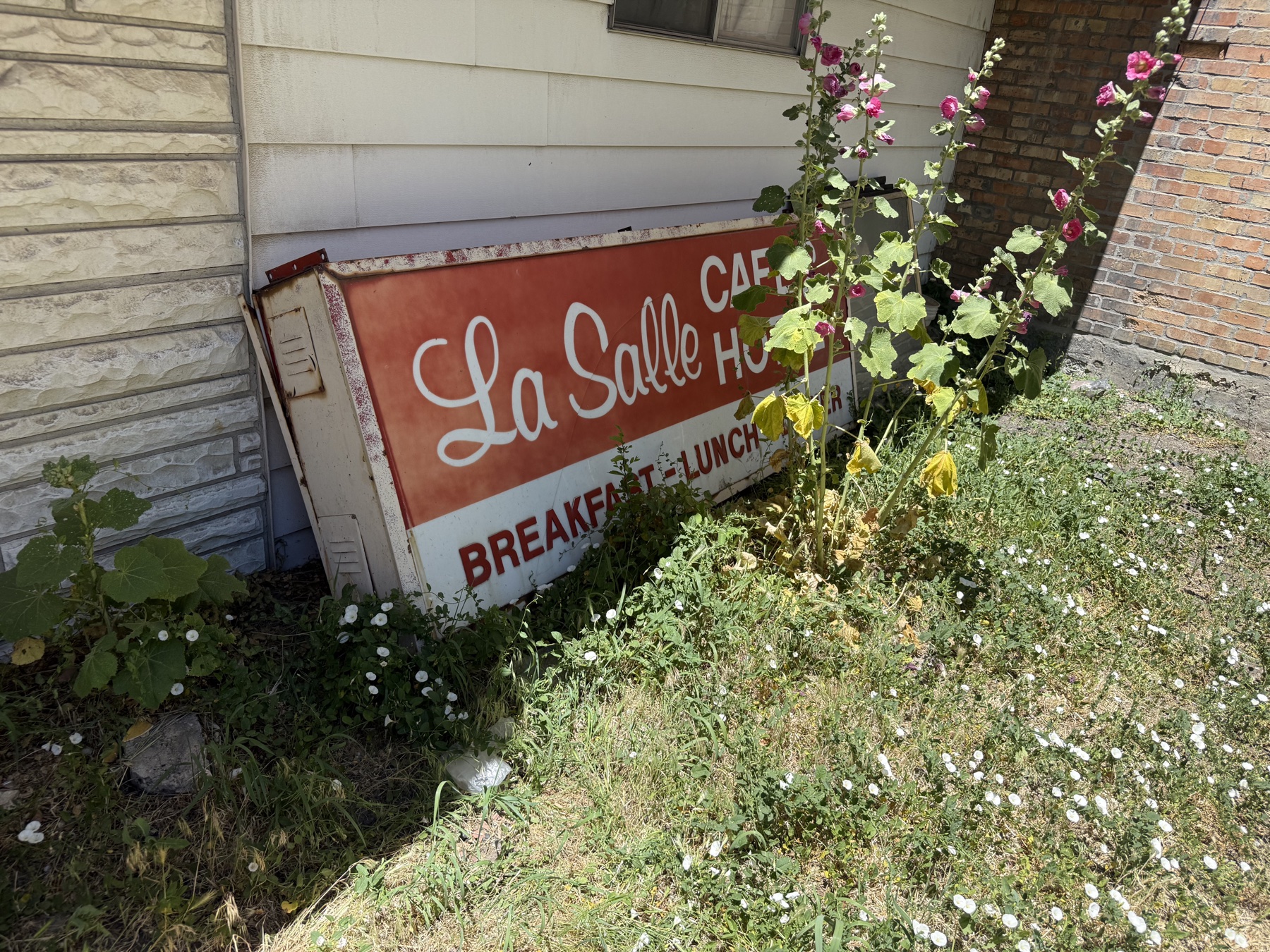
The original hand-painted La Salle Cafe & Hotel sign — Breakfast, Lunch, Dinner
The La Salle's own sign — not for sale. It watches over the collection.

The Provenance

The La Salle

Helper, Utah took its name from the railroad — the extra "helper" engines coupled on at the depot to shove heavy coal trains up the steep grade of Price Canyon. Where the trains stopped, a town grew, and the whole world arrived with it. By the 1920s some twenty-seven nationalities worked Carbon County's coal and rail — Italians, Greeks, Japanese, South Slavs, and more — most told they'd stay a season, and many staying a lifetime.

The La Salle Hotel was built into that moment. It went up in 1922, at 302 South Main Street, raised by John Eaquinta — born Giovanni Jaquanta in southern Italy — who had run sheep and goat ranches out in Spring Canyon before he traded the range for a place in town. The timing tells the story: 1922 was the year of the great Carbon County coal strike, when miners walked off the job and many poured their savings into storefronts of their own. Eaquinta's three-story brick block was one of those bets — the hotel filling the upper floors, the ground floor given over to the town's restless commerce.

Upstairs, the rooms filled with railroad men laying over between trains and miners in from the canyons. Downstairs, the café served breakfast, lunch, and dinner, and the barroom did what barrooms in a railroad town do. Over the years the street level held a food store called the Hub, a place called the Red Rooster, and the Wonder Bar — run in 1936 by John's son Frank. It was immigrant-built and coal-and-rail-fed, the kind of café-hotel-bar that anchored a hundred western towns and outlived most of them.

When the mines slowed and diesel engines no longer needed a push up the grade, Helper grew quiet and the La Salle passed from working hotel to landmark. In 1979 it was recognized as a contributing building in Helper's National Register historic district, and it still stands on Main Street today. Everything in this collection came out of it — and to hold a piece is to hold a little of that time and place: the immigrant West, the strike that made a merchant class, and a Main Street where the whole world once got off the train.

History documented from the building's National Register of Historic Places nomination (Helper Historic District, 1979) and Carbon County records.